
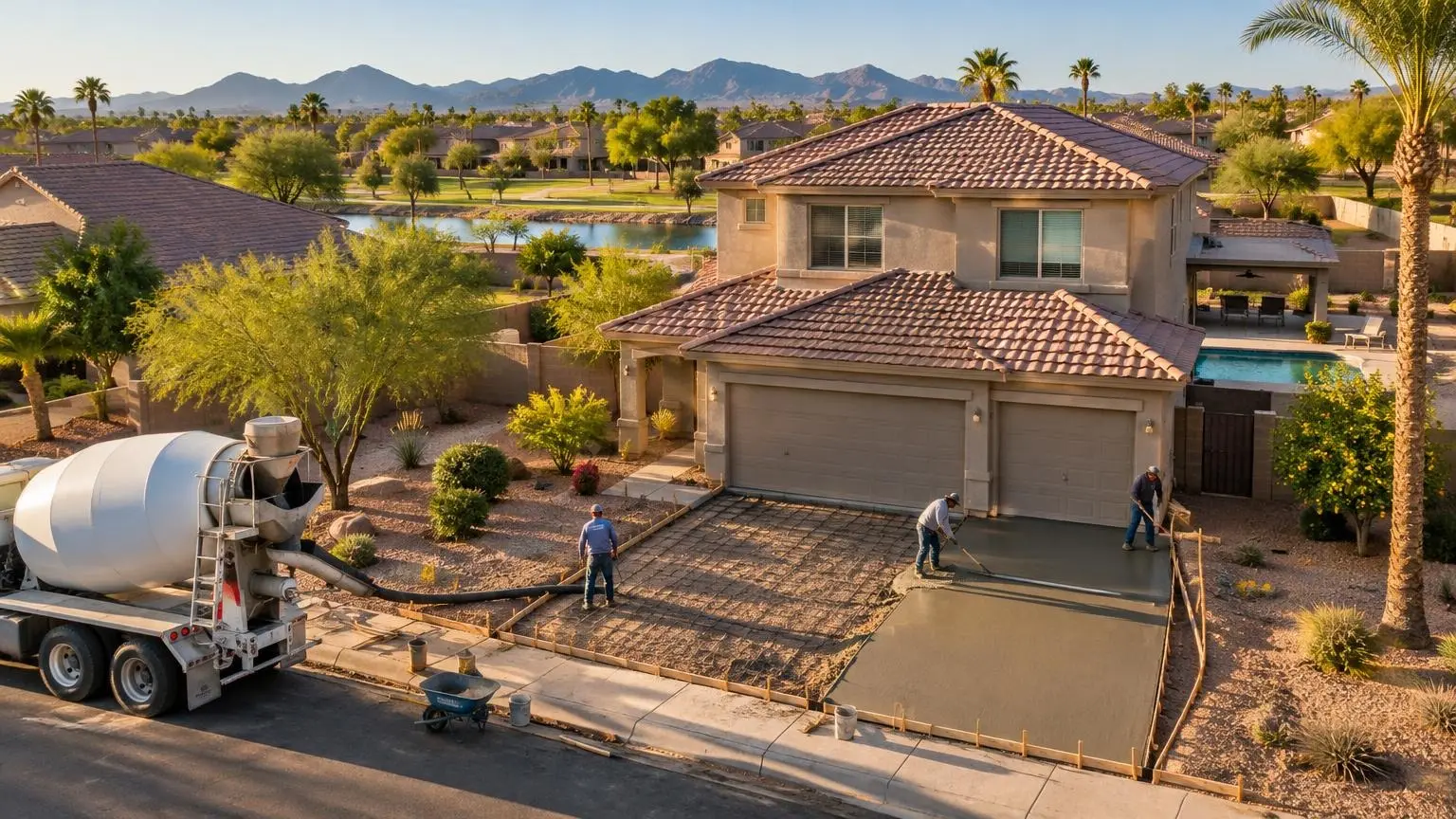
Fix it before you replace it
Concrete Repair in Gilbert, AZ
Cracks, sunken panels and worn surfaces repaired, after we find out why they failed.
- Free estimate with a site visit, measurements and a check of slope and drainage
- Written quote listing thickness, base, reinforcement, finish and joints
- Pour times and curing planned around East Valley heat
Most Old Concrete Is Worth a Second Look
Concrete Repair is often the smartest first step for Gilbert homeowners. With a median year built of 2003 for Gilbert homes, according to a Point2Homes summary of Census data, and about a quarter of homes dating to the 1990s, there is a lot of 20- to 35-year-old flatwork in driveways, walks and patios. Much of it is structurally fine with a few problems on top. Fixing those problems costs a fraction of a full replacement.
What causes the damage
- Shrinkage cracks: concrete shrinks as it dries; without enough control joints, it cracks on its own
- Settlement: soil that was poorly compacted, washed out by irrigation, or softened by roof runoff lets panels drop
- Surface wear: sun, water, chemicals and traffic wear down the top layer, especially on slabs that were never sealed
- Root and edge damage: trees and planters push or undermine edges
Repairs only last if the cause is fixed. If a downspout is soaking the soil under your driveway, leveling the slab without redirecting the water just means doing it again in a few years.
Repair options
- Crack filling and sealing: for cracks that are not moving, to keep water and dirt out
- Slab leveling: lifting sunken panels by pumping material underneath, either a cement-based slurry (mudjacking) or polyurethane foam
- Resurfacing: a thin overlay on a sound slab to renew a worn, stained or rough surface
- Section replacement: cutting out and repouring the worst panels while keeping the rest
- Joint repair: cleaning and sealing joints, including the joint between a pool deck and coping
Repair, resurface or replace?
HomeGuide's resurfacing guide gives a useful rule: resurfacing suits minor flaking and cracks narrower than about a quarter inch. It recommends replacement for large cracks, crumbling, spalling or structural problems, or when an overlay would need to be more than 2 inches thick. The same guide notes that cracks wider than a quarter inch can point to a deeper problem, which is why we check whether a crack is still moving before we patch it.
Our rule of thumb: if most of the slab is sound and level, repair it. If most of it is broken or sunken, replacing it is usually the better long-term spend, and we will tell you so.
Monsoon and irrigation damage
Much of the settling we look at in the East Valley traces back to water. The Phoenix-area monsoon season, which the National Weather Service sets from June 15 to September 30, brings short, heavy storms, and roof downspouts often dump all that water at the edge of a walk or driveway. Daily irrigation does the same thing more slowly. Part of every repair estimate is pointing out where water is coming from and what to change.
What to expect after a repair
- Filled cracks are less visible but rarely invisible
- Foam-lifted panels can be used almost right away (HomeGuide notes the foam cures in about 15 minutes); mudjacked panels need a short wait before traffic
- Resurfaced concrete can last about 8 to 15 years, per HomeGuide, with care
- Sealing after repairs helps everything last longer
Repair Methods We Use
Repairs for driveways, walks, patios, steps and pool decks.
Crack repair
Cleaning out and filling cracks, with flexible sealant where movement is expected.
Slab leveling
Raising sunken panels with mudjacking or polyurethane foam.
Resurfacing overlays
Thin new surfaces over sound concrete, plain or decorative.
Panel replacement
Cutting out and repouring the worst sections of a driveway, walk or patio.
Joint and edge repair
Resealing joints and rebuilding broken edges and corners.
Sealing
Cleaning and sealing repaired or worn concrete to slow future damage.
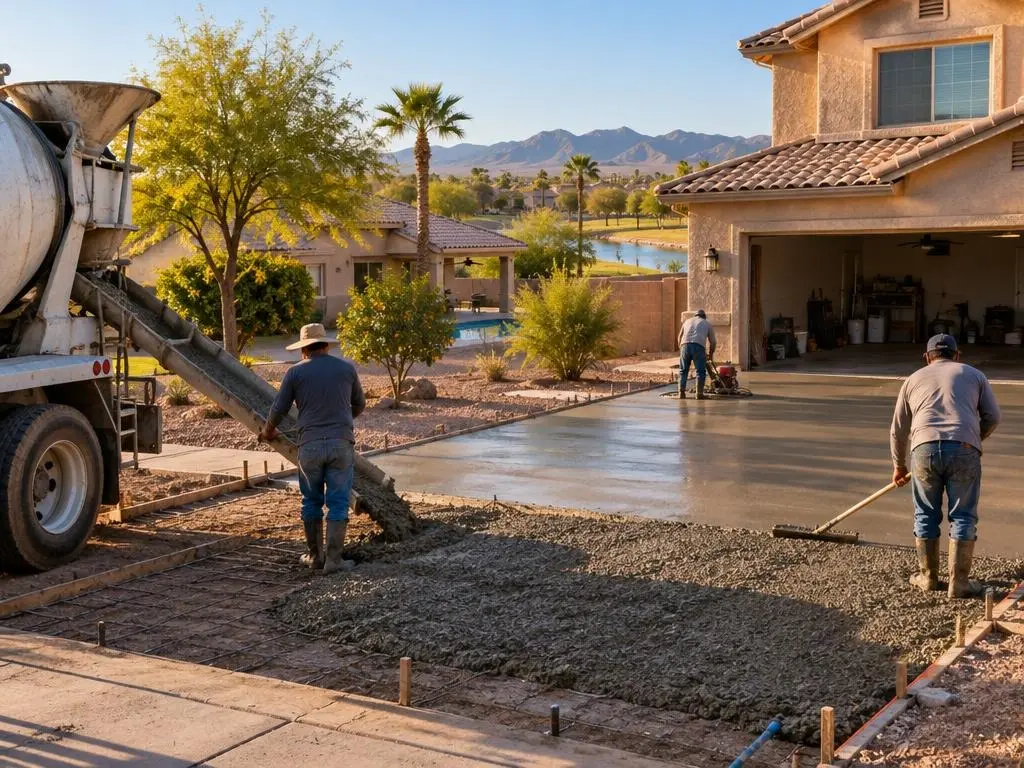
Typical Concrete Repair Costs
| Item | Published range |
|---|---|
| Crack filling (per linear ft) | $0.50 to $3 |
| Plain overlay on sound concrete (sq ft) | $3 to $7 |
| Resurfacing a 20' x 20' two-car driveway | $1,200 to $2,000 |
| Mudjacking (per sq ft) | $4 to $9 |
| Foam (polyjacking) lifting (sq ft) | $8 to $25 |
| Mudjacking a 100 sq ft walk | $400 to $900 |
| Leveling a 450 sq ft driveway, mudjacking | $1,800 to $4,100 |
| Sealing (per sq ft) | $1 to $3 |
Figures are national averages published in HomeGuide's concrete resurfacing and concrete leveling cost guides. Gilbert prices can differ, and the cause of the damage and the slab's condition change the total. The written estimate we give you is the price.
Our Repair Sequence
1. Diagnose
We measure cracks and drops, look for water sources and decide whether the slab is moving.
2. Options in writing
Repair, resurface or replace, with costs, so you can choose.
3. Fix the cause
Downspouts, irrigation and drainage issues are addressed or flagged before repair.
4. Repair and seal
Cracks filled, panels leveled or replaced, surface renewed, then sealed.
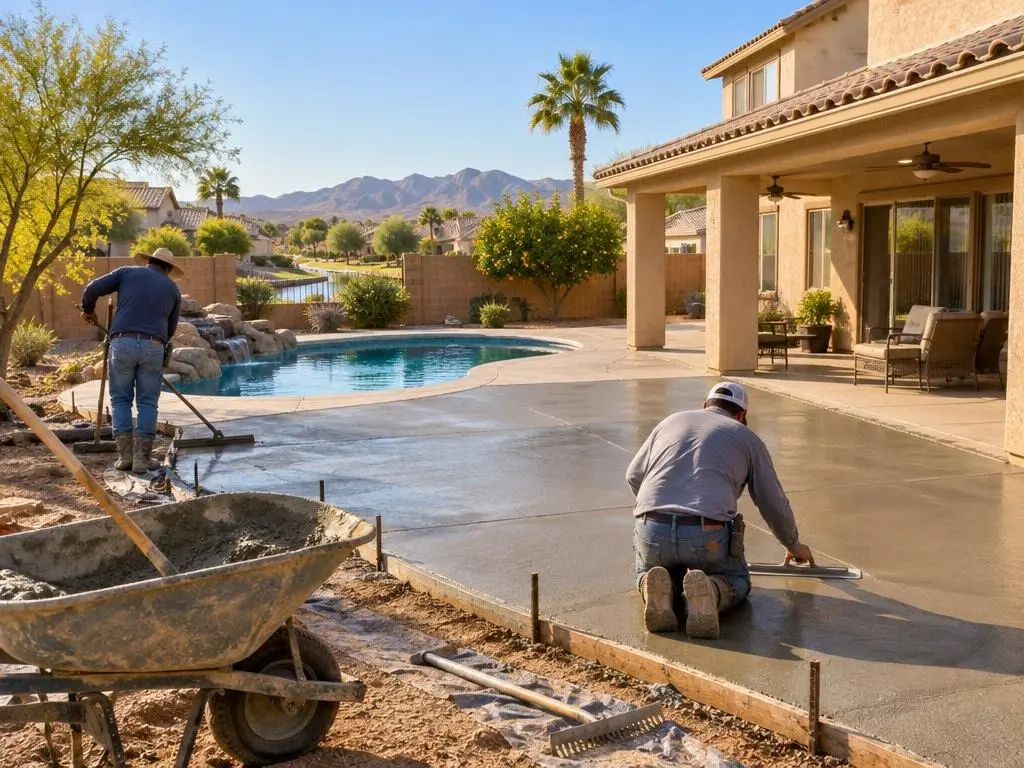
Concrete Repair Questions
Should I repair or replace my driveway?
If most of the driveway is sound and level, repair is usually the better value. If it has large cracks, crumbling, many sunken panels, or would need an overlay thicker than 2 inches, replacement makes more sense.
Mudjacking or foam leveling?
HomeGuide lists mudjacking at $4 to $9 per square foot and foam at $8 to $25. Foam is lighter and cures fast; mudjacking costs less. The right choice depends on the soil, the size of the void and your budget.
Will a repaired crack show?
Usually a little. Fillers do not match aged concrete exactly. Resurfacing or sealing afterward evens out the look.
Why does my concrete keep sinking?
Usually water under the slab, from downspouts, irrigation or poor drainage, or soil that was not compacted when it was poured. Leveling lasts longer when the water source is fixed at the same time.
Can you resurface a cracked slab?
Yes, if cracks are small and the slab is stable. Cracks are repaired first. Wide or moving cracks need structural repair or replacement, or they will come back through the new surface.
Concrete Repair Service Areas
- Concrete Contractors in Gilbert, AZ
- Concrete Contractors in Mesa, AZ
- Concrete Contractors in Chandler, AZ
- Concrete Contractors in Queen Creek, AZ
- Concrete Contractors in San Tan Valley, AZ
- Concrete Contractors in Higley, AZ
- Concrete Contractors in Tempe, AZ
- Concrete Contractors in Scottsdale, AZ
- Concrete Contractors in Phoenix, AZ
- Concrete Contractors in Ahwatukee, AZ
- Concrete Contractors in Apache Junction, AZ
- Concrete Contractors in Gold Canyon, AZ
- Concrete Contractors in Sun Lakes, AZ
- Concrete Contractors in Maricopa, AZ
- Concrete Contractors in Fountain Hills, AZ
- Concrete Contractors in Agritopia, AZ
- Concrete Contractors in Lehi, AZ
- Concrete Contractors in Leisure World, AZ
- Concrete Contractors in Guadalupe, AZ
- Concrete Contractors in Paradise Valley, AZ
Get a Concrete Repair Estimate
Free estimates on concrete crack repair, leveling and resurfacing in Gilbert and the East Valley.